
How Ely Square Shapes the Heartbeat and Walkability of Downtown Elyria
The Living Core of Downtown Elyria
At 400 Broad Street, Ely Square occupies the physical, historic, and social center of downtown Elyria. It is easy to view the park through a postcard lens, as a formal green framed by streets and older buildings. Yet that image captures only part of its value. The square functions as an active piece of downtown infrastructure, shaping how residents move, pause, meet, shop, and experience the historic district.
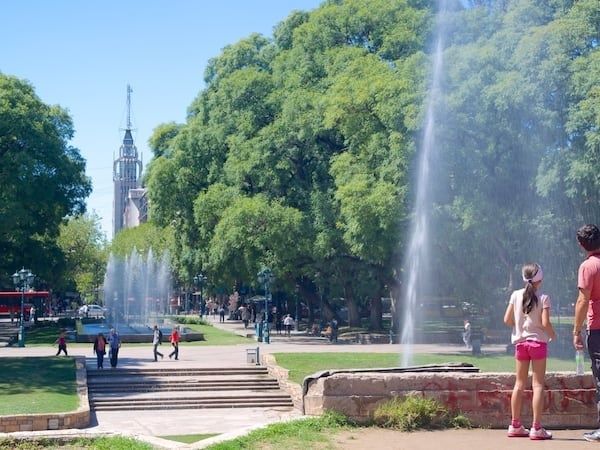
Its importance comes from the combination of several simple elements. Radial pathways make the park a practical crossing point, the central fountain provides an instantly recognizable landmark, and a mature deciduous canopy creates shade in an otherwise paved environment. Together, these features give Ely Square a dual role: it is both a pedestrian transportation nexus and a small climate oasis. That combination helps connect civic destinations with independent storefronts while giving downtown visitors a comfortable place to spend time.
Radial Design and Everyday Foot Traffic Dynamics
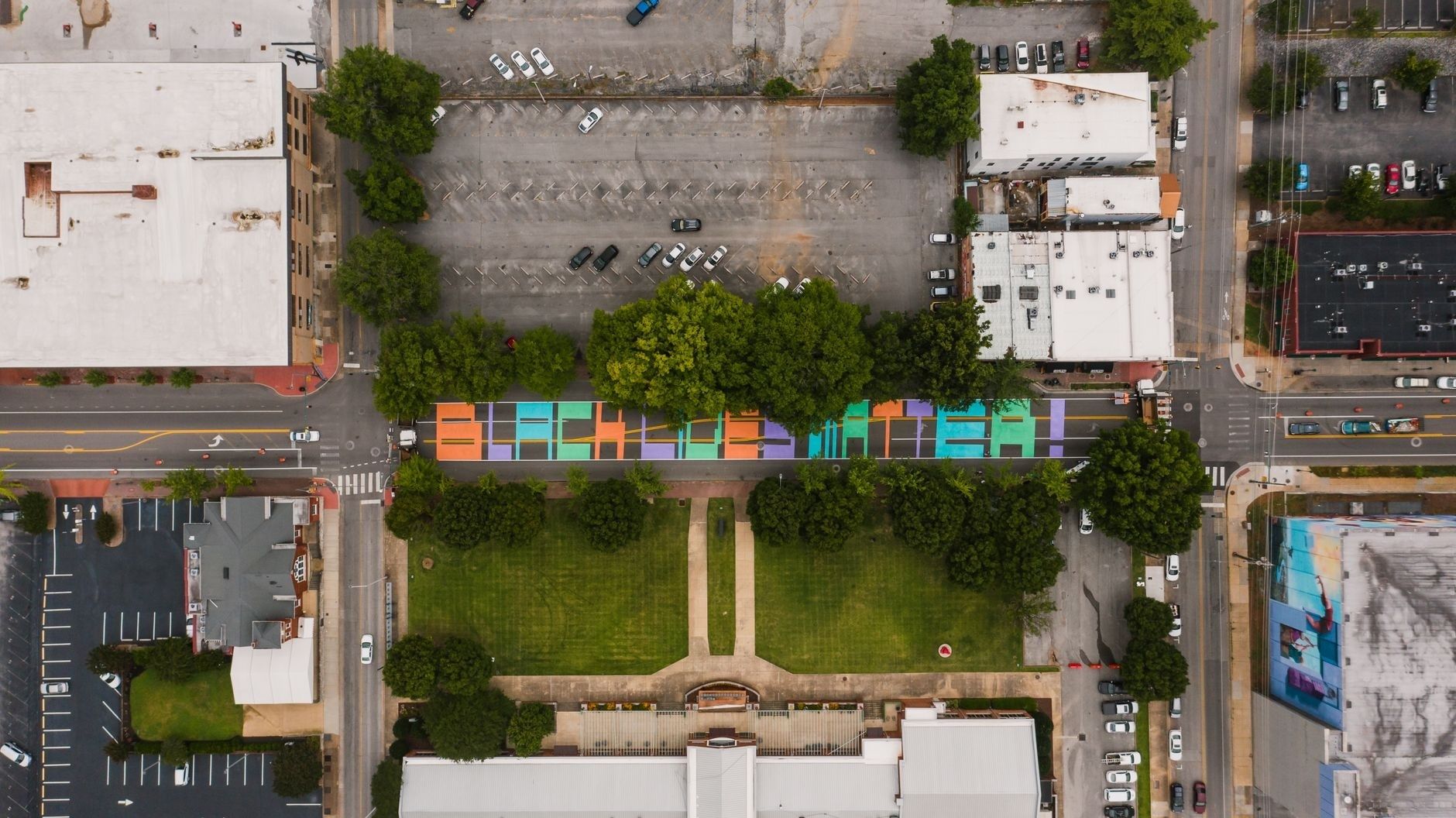
The square”s pathways help organize movement across downtown without requiring every pedestrian to follow the edges of the park. Diagonal routes can connect civic offices, cultural destinations, nearby businesses, and transit-oriented walking routes across Broad and Second Streets. For someone arriving downtown for an appointment, lunch, an event, or a short errand, the park can serve as a direct and legible passage rather than an obstacle to walk around.
The central fountain strengthens that network by acting as a visual reference point. People can describe where they are meeting, orient themselves after crossing a street, or use the fountain as the midpoint between separate destinations. This kind of landmark matters because walkability depends on more than sidewalk width. It also depends on whether people can understand a place quickly, choose a comfortable route, and feel confident about where a path leads.
Urban trail integration can make that experience more useful over time. Before a trail connection or improved pedestrian link is established, the square may function mainly as a destination. After connections are added, it can become part of a larger everyday route, helping residents combine errands, recreation, civic business, and shopping in one visit. The broader planning lesson is visible in City Square West, where a proposed public gathering space and pedestrian connection are treated as catalysts for surrounding residential, retail, and civic activity. Ely Square demonstrates the same principle at a local scale: a welcoming public space can distribute movement into adjacent blocks instead of keeping activity confined to one entrance or one destination.
| Square feature | Walkability benefit | Downtown effect |
|---|---|---|
| Radial pathways | Direct crossings between surrounding streets and destinations | More visible and convenient movement through the district |
| Central fountain | Simple orientation and meeting point | Stronger social activity and clearer wayfinding |
| Open lawn areas | Flexible space for resting and gathering | Longer visits and more opportunities for events |
| Tree-lined edges | Shade and visual separation from traffic | A more comfortable pedestrian environment |
Canopy Architecture and Urban Microclimate Cooling
The mature tree canopy gives Ely Square an architectural quality that built structures alone cannot provide. Deciduous trees define the edges of the open space, filter sunlight, and create a shaded ceiling over portions of the walking environment. During warm weather, that canopy can make the square feel markedly different from nearby roadways and exposed sidewalks, encouraging pedestrians to slow down rather than simply pass through.
The cooling effect comes from several features working together. Leaves block solar radiation, trees release moisture through evapotranspiration, and open lawns reduce the concentration of heat-absorbing pavement. The fountain adds another sensory and potentially cooling element through moving water and localized misting near the feature. These effects should not be treated as a substitute for citywide heat planning, and no site-specific temperature reduction has been established in the available information. Still, the design illustrates why public greenery is often considered essential infrastructure rather than decoration.
Municipal tree assessments elsewhere show how canopy can be measured and managed over time. The Columbus and Franklin County assessment reported Columbus canopy increasing from 19.6 percent in 2011 to 22 percent in 2021, while Franklin County increased from 21.1 percent to 23.9 percent. Those figures do not describe Ely Square, but they demonstrate the value of tracking tree cover, losses, planting opportunities, and maintenance needs instead of relying on appearance alone. Research and guidance from the University of Nebraska also emphasizes species diversity, suitable placement, water access, and long-term care, particularly as communities face pests, disease, drought, and severe weather.
- Shade: Tree crowns reduce direct sun exposure on paths, benches, and gathering areas.
- Surface balance: Lawns and planted areas break up expanses of heat-retaining pavement.
- Stormwater support: Roots and soil can help absorb and slow rainfall before it reaches drainage systems.
- Comfort and identity: A consistent canopy gives the historic district a recognizable character and encourages people to linger.
- Resilience: Diverse species and planned maintenance reduce the risk that one pest or disease will eliminate a large share of the canopy.
That approach aligns with the principles in the TOD STMP, a municipal street tree framework that connects canopy planning with shade, safety, accessibility, neighborhood identity, resource conservation, and pedestrian comfort. For Elyria, the practical message is clear: protecting mature trees should be paired with inventories, replacement planting, careful species selection, and designs that keep walking routes accessible for every age and ability.
The Economic Spillover Fueling Broad Street Businesses
A public square supports local commerce not only when it hosts a major festival, but also when it makes ordinary downtown visits more pleasant. A person who crosses Ely Square on the way to an appointment may notice a storefront, pause near the fountain, or decide to stay for coffee or lunch. A municipal worker taking a midday walk can become a repeat customer for a nearby business. A visitor attending an evening performance may arrive early, explore surrounding blocks, and return after the event.
Dwell time is especially important for independent merchants because smaller businesses often depend on repeated, visible interaction with a district. The square can bring together different groups that might otherwise remain separate: office employees, residents, families, event attendees, and people making short shopping trips. When those users share a comfortable public space, nearby storefronts gain more opportunities for recognition and spontaneous visits. The relationship is not automatic, however. Good results depend on clear pedestrian connections, open and welcoming frontages, useful signage, and businesses that make the most of activity outside their doors.
Independent merchants can turn proximity into practical advantage without overwhelming the public realm. A café might offer a clearly marked takeout route for customers heading to the square. A retailer could create a seasonal window display tied to a festival or concert. Businesses can coordinate hours, promote event-day specials responsibly, and ensure that entrances remain easy to find from the paths. Outdoor displays should support, rather than narrow, pedestrian circulation. Local organizations can also help by sharing event information and encouraging visitors to explore more than the event footprint.
- Use windows and entrances to address the square visually, even when customers are still outside.
- Offer concise, accessible information about hours, services, and event-day options.
- Coordinate promotions with neighboring businesses instead of treating each event as an isolated opportunity.
- Provide seating, shade, and clear pedestrian space where private activity meets the public sidewalk.
- Invite visitors to return on ordinary weekdays, when sustained local spending matters most.
Civic Energy and Cultural Gatherings in 2026
Ely Square”s civic role becomes especially visible during large gatherings. The City of Elyria”s event archive lists the Cleveland POPS Orchestra for a September 5 performance in the Square, with the scheduled program running from 7:00 PM to 8:30 PM. The same archive lists the Elyria Apple Festival across September 18, 19, and 20, with activities scheduled from late morning into the evening. On the current date, September 20, 2026, the festival”s listed schedule runs from 10:00 AM to 6:00 PM. These events turn the square into a regional invitation, while surrounding businesses become part of the visitor experience.
Juneteenth provides another example of how the square can carry both celebration and historical meaning. On Saturday, June 20, 2026, the City of Elyria, Elyria Community Partnership, and Elyria Black Legacy Connection scheduled a festival at Ely Square from noon to 5:00 PM. The program also included a commemorative parade assembling at the Elyria Athletic Sports Complex, a softball game at West Park, and a later caravan for justice and equality in Lorain. By placing the festival in the downtown square, the city connected cultural expression with a highly visible civic setting.
Temporary event infrastructure must be planned so that it adds energy without eliminating everyday permeability. Stages, vendor tents, sound equipment, barriers, and service access all need space, but routes through and around the square should remain understandable. The strongest event layouts preserve accessible paths, maintain sightlines to storefronts, protect mature trees and root zones, and provide clear information about entrances and exits.
- Before the event: Publish route, accessibility, parking, and timing information through official city and event channels.
- During setup: Protect radial walking connections and use barriers only where safety or operations require them.
- During the program: Keep businesses visible, provide clear pedestrian guidance, and maintain accessible circulation.
- Afterward: Remove equipment promptly, inspect lawns and trees, and document lessons for the next gathering.
That balance allows the square to perform two jobs at once. It can host music, festivals, remembrance, and civic celebration while continuing to function as a daily route for residents and downtown workers. The goal is not to choose between event activity and ordinary walkability, but to design event activity so that it reinforces the public space”s everyday usefulness.
Embracing the Next Century of Walkable Momentum
Ely Square”s strength lies in the way its parts reinforce one another. The radial paths make movement intuitive, the fountain gives people a shared point of orientation, and the tree canopy softens the environmental pressure created by surrounding pavement. Events then add civic energy, while nearby storefronts benefit from the people who pass through, pause, and return. The result is more than a landscaped block. It is a human-scaled urban engine that connects mobility, climate comfort, commerce, and community identity.
Protecting that value requires steady, practical attention. Residents can support the square by visiting downtown on ordinary days, attending public events, exploring local storefronts, and treating the park as a shared civic asset. Business owners can strengthen the connection through welcoming frontages, coordinated promotions, and pedestrian-friendly displays. Civic leaders and planners can prioritize tree inventories, canopy replacement, accessible paths, durable event infrastructure, and street designs that keep the square connected to surrounding blocks. With those commitments, Ely Square can carry historic character into the next century while continuing to generate the everyday movement and neighborhood pride that make downtown Elyria feel alive.