

Where Your Money Actually Goes: The Ripple Effect of Buying Downtown
The Quiet Arithmetic of Main Street Commerce
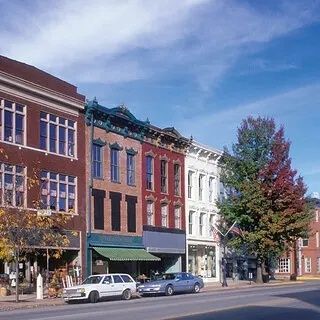
A purchase in downtown Elyria is more than an exchange between a customer and a storefront. It is the first movement in a chain of payments that can reach an employee”s household, a local accountant, a nearby supplier, a building contractor, and eventually the public services that make the district usable. The coffee, repair service, meal, gift, or professional appointment may appear modest, but repeated transactions create the financial rhythm of a commercial neighborhood.
That argument does not require sentimental appeals. It can be examined through the practical mechanics of local spending: how quickly revenue recirculates, where payroll is distributed, which suppliers receive contracts, and how commercial activity contributes to tax-supported services. A locally owned shop cannot keep every dollar within city limits, since it still pays for inventory, utilities, technology, insurance, and other outside costs. However, independent businesses often make more decisions locally, giving a greater share of each transaction an opportunity to circulate nearby. That dollar velocity helps sustain the people, properties, and public spaces that give downtown its identity.
Dissecting the Dollar: Independent Merchants Versus Regional Big Box Retail
The most useful comparison is not simply local versus national, but the structure of each business model. An independent downtown merchant may use revenue to pay local staff, hire a nearby bookkeeper, purchase maintenance services from a regional provider, and source some inventory from area makers or distributors. A regional big box retailer also creates jobs and pays taxes, but a larger share of purchasing, management, marketing, data processing, and profit allocation may be controlled outside the municipality. The result is that two purchases with the same price can produce different local aftereffects.
Local retention is not guaranteed, and independent operators face substantial pressures. A 2025 Main Street America survey of 1,587 business owners found that 93 percent had fewer than 20 employees, while 54 percent reported less than $200,000 in gross revenue during 2024. Nearly half reported declining profits, and 39 percent reported declining revenue. Those figures matter because a downtown business is a community asset only if it remains financially viable. Choosing local is therefore not a substitute for fair prices, sound management, or strong customer service. It is one practical way to give capable operators the revenue needed to keep hiring, investing, and serving the district.
| Where a purchase can travel | Independent downtown establishment | Regional or national chain |
|---|---|---|
| Payroll | Often managed by a local owner, with wages spent in the surrounding area | Local employees remain important, while corporate payroll decisions are generally centralized |
| Professional services | May rely on nearby accountants, tradespeople, printers, designers, and legal advisers | Services may be contracted through regional or national systems |
| Ownership returns | Business income may support a local household or be reinvested in the building and district | Profit distribution and investment decisions may occur outside the community |
| Supplier relationships | Can include local makers, farms, distributors, and specialty vendors | Often shaped by centralized purchasing and standardized supply chains |
These differences create secondary and tertiary rounds of spending. A downtown restaurant that purchases repair work locally helps another business pay wages. A retailer that hires a nearby contractor for a façade improvement supports construction employment and material suppliers. The effect is not infinite, and some money inevitably leaves the area, but each locally made business decision can add another turn to the economic cycle. Main Street America”s national reinvestment reporting tracks this broader relationship through measures such as buildings rehabilitated, jobs and businesses gained, volunteer hours, and the reinvestment ratio, which estimates new investment generated per dollar spent operating a participating Main Street program during a given year.
Fueling Public Infrastructure Through Local Commercial Tax Bases
Downtown density gives municipalities an important fiscal advantage. A compact historic district can place many businesses, offices, apartments, and public destinations within a relatively small footprint. That concentration can generate sales and property tax activity while requiring less spread-out infrastructure per destination than a pattern dominated by distant commercial parcels, large parking fields, and extended road networks. The relationship is not automatic, since tax structures differ by state and municipality, but a well-used downtown can make public investment more productive by concentrating people and activity.
Sales-related revenues can help support the municipal functions residents notice every day, including emergency response, street maintenance, code enforcement, sanitation, public programming, and parks. Property taxes and other local revenues also help maintain the buildings and public realm around storefronts. When commercial occupancy declines, the effect reaches beyond vacant windows. Fewer visits can reduce demand for nearby services, weaken property investment, and make it harder to justify improvements that encourage additional activity. When storefronts are active, the same public improvements, such as clean sidewalks, lighting, landscaping, crossings, and event infrastructure, serve more people and support more transactions.
Public programs can reinforce this cycle, particularly when incentives are tied to measurable investment, employment, housing, or rehabilitation. Municipalities frequently use economic development frameworks, such as performance grants and the City of Houston”s economic development incentives, to partner with dynamic commercial hubs. Houston”s Chapter 380 Program illustrates the accountability involved: assistance may take the form of loans or performance-based grants, projects must demonstrate economic impact, and agreements can include requirements for construction, equity investment, job creation, or affordable housing. This kind of public participation works best when it complements, rather than replaces, sustained customer demand.
- Commercial activity supports taxable sales, occupied properties, payroll, and business investment.
- Public revenue helps fund streets, emergency services, parks, maintenance, and civic programming.
- Quality public spaces make downtown more comfortable for shoppers, workers, residents, and visitors.
- Repeated use strengthens the case for additional rehabilitation, housing, events, and transportation improvements.
Commercial Stability and Federal Relief Integration
Street-level occupancy has consequences for the value and resilience of surrounding commercial real estate. A filled storefront can attract adjacent customers, improve perceptions of safety and care, and make a property more appealing to prospective tenants. By contrast, prolonged vacancy can reduce foot traffic and weaken the operating environment for businesses that remain. Downtown Santa Barbara”s experience illustrates why vacancy cannot be explained by a single factor. Its reported commercial vacancy rate of 12.4 percent was below both the 2018 rate of 14.8 percent and the pandemic-era peak of 19.28 percent, yet structural issues remained, including high rents, oversized spaces, limited downtown housing, and a retail mix that did not always serve everyday local needs.
The lesson for any historic district is that consumer activity and public investment must work together. Streetscape improvements, housing development, transportation access, façade programs, public safety, and event programming can make a district more usable, but businesses still need regular customers. Conversely, shoppers and visitors benefit when public agencies maintain the physical environment and provide reliable services. Federal recovery programs recognized this interdependence. The U.S. Treasury”s State and Local Fiscal Recovery Funds distributed $350 billion to state, territorial, local, and Tribal governments for pandemic response and recovery, including support for essential services, economic impacts, infrastructure, and eligible community development.
Recovery resources can stabilize a foundation, but they do not create a permanent substitute for a functioning local economy. Long-term fiscal resilience depends on aligning public programs with everyday behavior: residents spending recurring household dollars locally, property owners maintaining usable spaces, businesses collaborating across the district, and civic organizations measuring outcomes rather than relying on short-term visibility alone. The following sequence shows how that alignment can reinforce downtown stability:
- Maintain the public platform. Keep streets, sidewalks, lighting, parks, utilities, and emergency services dependable so the district is ready for daily use.
- Support occupancy and adaptation. Encourage suitable businesses, housing, flexible spaces, and rehabilitation that reflect current community needs rather than relying on one retail formula.
- Convert visits into repeat habits. Make local shopping, dining, services, and events part of ordinary weekly routines, not only occasional destination trips.
- Track the results. Monitor occupancy, investment, employment, foot traffic, tax activity, and community participation to guide future decisions.
The Multiplier Effect on Civic Life and Community Investment
Independent business owners often contribute to civic life in ways that are difficult to capture in a tax spreadsheet. They sponsor youth sports, donate gift cards to fundraisers, support school activities, underwrite community events, and provide meeting places for local groups. These contributions are not universal, and small businesses cannot be expected to finance every community need, especially when many owners report that business income does not consistently cover basic household expenses. Still, the personal connection between merchant and neighborhood frequently creates forms of support that are more visible and locally responsive.
A busy downtown also strengthens the appeal of festivals, performances, historic architecture, restaurants, and visitor attractions. The proposed San Antonio Sports and Entertainment District economic analysis demonstrates how visitor, resident, and worker spending can produce direct, indirect, and induced effects, with sales and lodging taxes among the fiscal benefits examined. Elyria”s own historic character, public spaces, parks, and community events can benefit from the same principle at an appropriate local scale. More reasons to visit can produce more customers for businesses, while a strong business mix gives residents and visitors more reasons to stay longer.
- Choose locally owned businesses for recurring purchases such as meals, gifts, repairs, personal services, and professional work.
- Combine errands downtown so one visit supports several establishments and public destinations.
- Attend community events and explore nearby businesses rather than treating events as isolated occasions.
- Ask local merchants which products, services, or partnerships would help them serve the neighborhood better.
- Support preservation and adaptive reuse so historic buildings remain economically useful for future generations.
Transforming Everyday Transactions into Lasting Civic Equity
Everyday spending is a form of practical civic participation. It does not replace voting, volunteering, responsible public budgeting, or strong economic policy, but it gives residents a direct way to influence which businesses remain visible, which buildings stay occupied, and which commercial patterns become financially sustainable. A purchase at an independent downtown establishment can help maintain payroll, fund a local service provider, support a building improvement, and contribute to the tax base that underwrites shared infrastructure.
The most effective approach is intentional rather than absolute. Shift a few recurring budget lines to downtown businesses, schedule regular visits, purchase from local makers when possible, use local professional services, and make time for events that bring energy to the historic district. Encourage employers, schools, civic organizations, and visitors to do the same. Over time, these repeated choices turn downtown from a place visited occasionally into a dependable community asset, preserving town identity while generating the commercial momentum needed for safer streets, stronger public spaces, thriving businesses, and a more resilient future.
By Magnus
- 3, Oct, 2026
- 0 Comments